
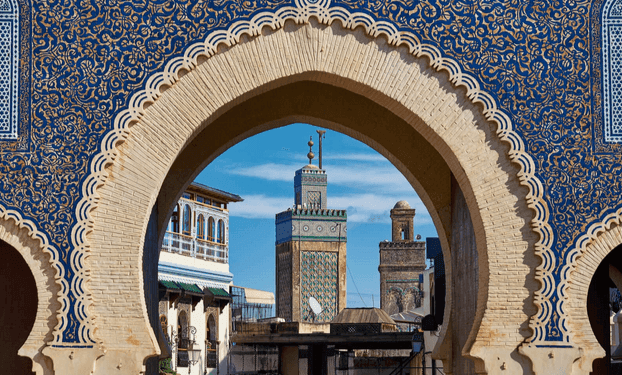
Moroccan architecture encompasses not only buildings, but also embodies centuries of history, religious ideas, scientific and artistic creativity, and skilled craftsmanship. As you walk through the
Medina of Marrakech, Fez, or even Rabat, you bump into walls that tell tales of empires and distant worlds.
Via time, then, we find out in this article the styles, products, and social influences that have shaped Moroccan architecture from the 11th century to the present day.
The Almoravid Period: The Foundation (11 th 12 th Century).
The Almoravids were Saharan Berber rulers who built a strong kingdom in Morocco and certain regions of Spain. They were built practically and were durable, influenced by Islamic ideas.
Secret Attributes.
- Simple, Geometric Structures.
- Minimal embellishment.
- Innovation of the horseshoe arch.
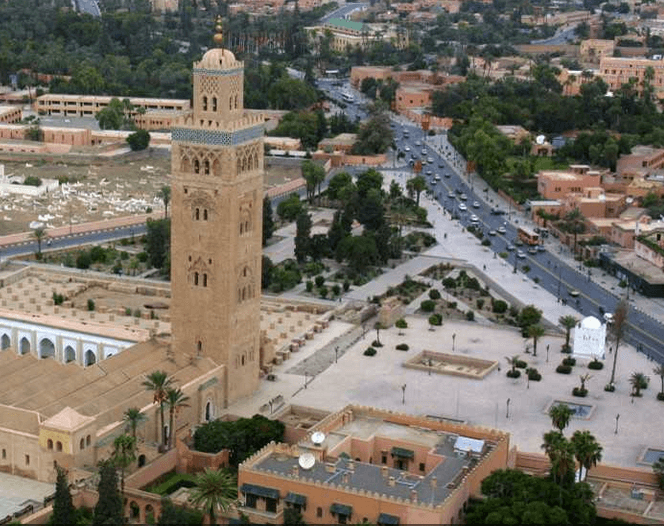
The Almoravids brought with them mosques that had T-shaped houses . A good example is that of Koutoubia Mosque located in Marrakech which subsequently became an example to other mosques located in North Africa.
Almohad influence: Massive Transition (12th 13th Century).
When the Almohads supplanted the Almoravids, they enriched them with a interpretation of Islam and expanded ideas in architecture.
Distinguishing characteristics:
- Tall minarets of square bases.
- Ornamental brick walls and blank or blind arches.
- Pay attention to proportion and get measured.
The height of the Almohad style is reached at the Hassan Tower in Rabat and the Koutoubia Turret, firm and massive, and elegant. They were also the foundation of future developments in architecture in Maghreb as well as Andalusia.
The Marinid Empire: Artistic Decoration (13th-15th th Century).
The Marinids introduced additional energy to the cities in Morocco and emphasized intellectual life. They resembled grace and knowledge in their style of building.
Building Elements.
The immensely amplified madrasas (Islamic schools).
Cedar wood, stucco, and zellige (mosaic tiles).
Some additional ideas of calligraphy and flowers that are more decorative.
A brilliant example of Marinid architecture is the Bouanania Madrasa in the city of Fez – symmetrical, poetic, and rich in detail it is. This period expanded upon the creative nature of Moroccan structures.
The Saadian Age: The Golden Touch (16th-17th Century).
The Saadians were put in place of power when there was a lot of diversity, and hence such diversity features were around in their architectural career. They combined previous influences with something brand new in splendor.
Noteworthy Payments.
Italian Carrara marble is used.
Sculpture work and floor tiles with luxury furnishings of gold leaf fallen and elaborate floor tiles.
Islamization of Andalusian elements.
The marvel of this period can be observed at the Saadian Tombs in Marrakech. The architecture reflects the ideas of fine-tuned preference, prestige, and immortality.
Alaouite Duration: Tailored Fills Sustainability (17th Century–Present).
The Alaouites, the present ruling dynasty, were the representatives of architectural continuity that brought Morocco to new times. Although they were not radical innovators, they did preserve some of the features of Moroccan style.
Payments.
Reconstruction of the old Medina and monuments.
Continued adoption: lime plaster, cedar timber and terracotta.
The imperial palaces and religious sites were expanded.
The Royal Palace of Fez and the Moulay Ismail Palace in Meknes are among the monuments of this era. The focus of their texts relays the idea of relationship, national identity, and history.
Andalusian Influence: A Continuous Concept.
Andalusian building (Islamic Spain) has, in fact, left a deep influence on the Moroccan background. This is particularly evident in northern Morocco, such as Tetouan and Chefchaouen.
Influences Include:
- Riads
- Central courtyards.
- Timber painted ceilings.
- Horseshoe arches and pretty tiles.
These features were accompanied by amalgamation with Berber, Arab, and French architecture, which is what we nowadays refer to as Moroccan architecture.
French Colonial Period: Urban Planning and New Products (1912– 1956).
The introduction of European urban planning and structures and materials such as concrete and steel took place under the French Protectorate in Morocco.
The Effects of Architecture.
Expansion of Ville Nouvelle (brand-new towns) near the old Medina.
- Entry of art Deco design and Neo-Moorish designs.
- The use of boulevards, roundabouts, and colonial buildings with Islamic facades.
One can see evidence of such impacts in cities such as Casablanca, which still has modernist buildings near turrets.
Modern Moroccan architecture: the blend of heritage and technology.
The struggle to stabilize custom and modernity is something that the Moroccan designers have to face today. The most desirable modern buildings should have all the aspects of respecting the past and fulfilling the present needs of the 21st century.
Characteristics of the Modern Plan.
- Environmentally friendly materials and ecologically friendly building.
- Light and airy interiors.
- Reminiscent of conventional features, as mashrabiya, arches and tiles.
- Awareness in public, business buildings internationally.
Buildings with appreciable modern-day design but acknowledging the history of Morocco include the Mohammed VI Tower in Rabat and the Menara Flight Terminal in Marrakech.
Riads: Living In Art.
The most valuable kinds of Moroccan buildings these days are the riad, a. typical household around a garden. Riads are highly visited and even frequented by hotels, restaurants, engineers, and tourists, among other travelers.
What is Unique About Riad?
- Inner garden – or fountain of serenity
- Large walls to keep privacy and climatic conditions.
- The walls, arches and furniture there are covered with Mosaics.
Riads are found in Fez, Marrakech, Essaouira, and other cities, providing visitors with direct access to the Moroccan heritage.
Role of Craftsmen: Artists in the Beauty.
Moroccan architecture is not only design related, it is also about craftsmanship. It has been embellished generation after generation through:
- Zellige (mosaic tilework).
- Stucco carving.
- Tadelakt (polished plaster).
- Wood carving and paint.
All these techniques are kept alive in the Moroccan institutions and workshops that continue to provide the essence of the architecture in Morocco.
Evolution of the Moroccan architecture is a path of religion, beauty and obtrusiveness. Each period, be it aesthetic Almoravids or eco-friendly more modern architects of today, had its trace. It is a great mosque, a peaceful riad, or a noisy city square; the Moroccan architecture is influenced and adapted.
It is not just a story about a background but a manifestation of identity.